रामायणRamayana for Kids
The Ramayana, Explained for the Next Generation
You don't need to know the whole story to begin.
The Ramayana is a vast and timeless story. Our Ram Leela brings selected moments of that journey together so families can experience the heart of the story in one afternoon.
- I
Chapter I · Ayodhya
A Prince Named Ram
In the kingdom of Ayodhya, King Dashrath and his three queens — Kaushalya, Kaikeyi and Sumitra — raise four sons: Ram, Lakshman, Bharat and Shatrughna. Ram is admired for his character, truthfulness and self-control.
What can we learn? Ram grows up learning about responsibility, discipline, truth and dharma.
- II
Chapter II · The Forest
When Doing the Right Thing Is Difficult
Because his father had given a promise, Ram accepts fourteen years of exile in the forest. Sita chooses to go with him. Lakshman chooses to go with them both.
What can we learn? Sometimes doing the right thing requires sacrifice.
- III
Chapter III · Ayodhya
Bharat and the Padukas
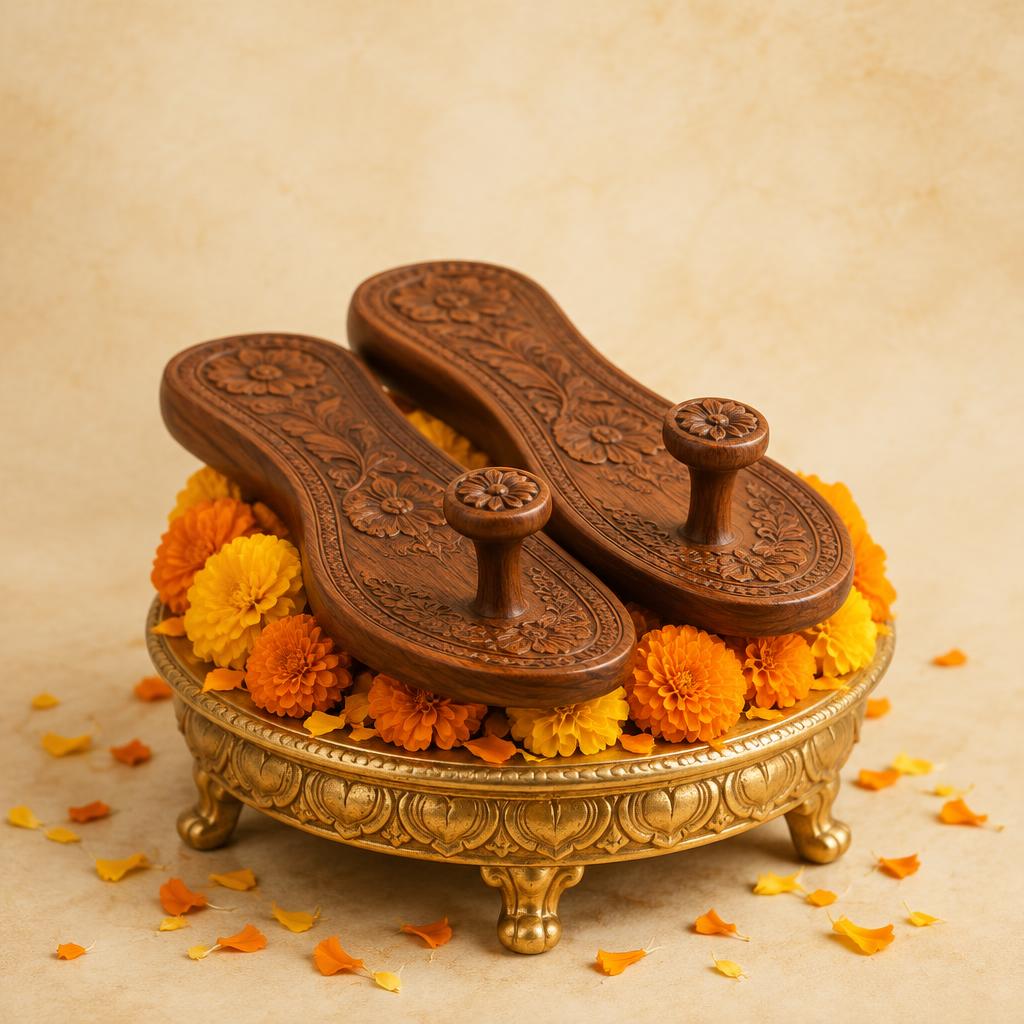
Bharat refuses to simply take the throne. He carries Ram's padukas home and rules in Ram's name.
What can we learn? Real love can mean putting someone else's rightful place ahead of your own.
- IV
Chapter IV · Panchavati
When Choices Have Consequences
A golden deer, a deception, and Sita is taken to Lanka by Ravan.
What can we learn? Temptation and deception lead to consequences.
- V
Chapter V · The Ocean
Hanuman and the Setu
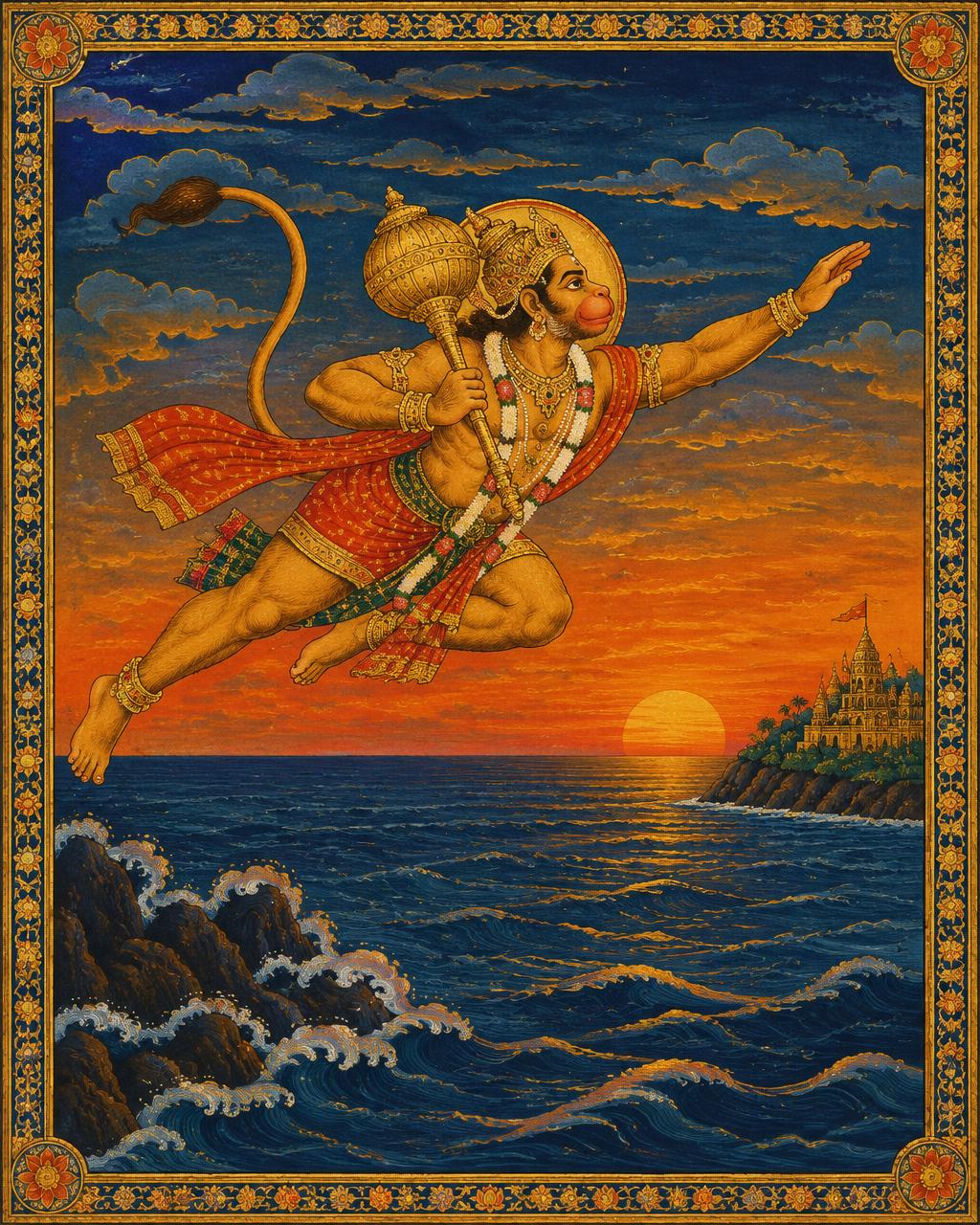
Hanuman finds Sita, and an entire community builds a bridge across the sea.
What can we learn? No contribution is too small.
- VI
Chapter VI · Lanka
Dharma and Adharma
Vibhishan chooses truth over blind loyalty, and Ram faces Ravan.
What can we learn? Our choices shape who we become.
- VII
Chapter VII · Home
The Return to Ayodhya
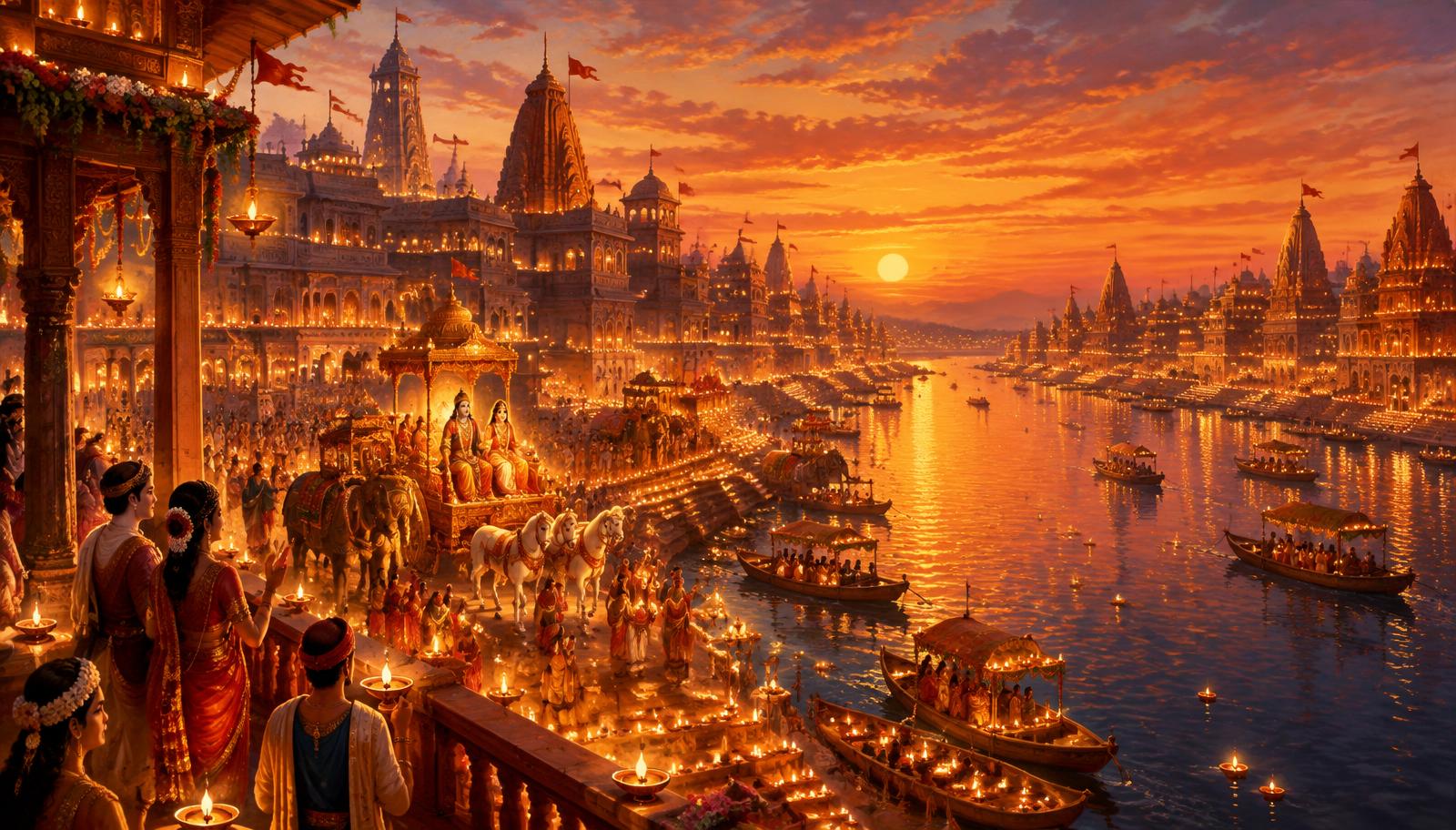
After fourteen years, Ram, Sita and Lakshman come home to a city of lamps.
What can we learn? This is the moment that becomes Diwali.
Bharat's choice
When Love Means Giving Up the Throne
Bharat could have simply taken the kingdom. Instead, he asks for Ram's padukas, places them on the throne, and governs Ayodhya in Ram's name while Ram remains in exile.
Real love does not always mean getting what you want. Sometimes it means putting someone else's rightful place ahead of your own.
Panchavati
When Choices Have Consequences
In the forest of Panchavati, Shurpanakha's encounter with Ram and Lakshman sets events in motion. Ravan, king of Lanka, enlists Maricha, who appears as a shimmering golden deer. While Ram follows it, Sita is deceived and carried away to Lanka.
The Ramayana isn't simply good people versus bad people. It is a story about temptation, deception, consequences — and the courage to stand up for what is right.
Courage takes many forms
Then Came Hanuman
Hanuman brings together strength, humility, intelligence, courage and devotion.
His greatest strength is not how far he can leap. It is his willingness to use his abilities in service of something greater than himself.
Courage
Do what needs to be done.
Devotion
Serve with your whole heart.
Humility
Great strength does not require ego.
Purpose
Use your abilities to help others.
Ram Setu
When Everyone Helps, the Ocean Can Be Crossed
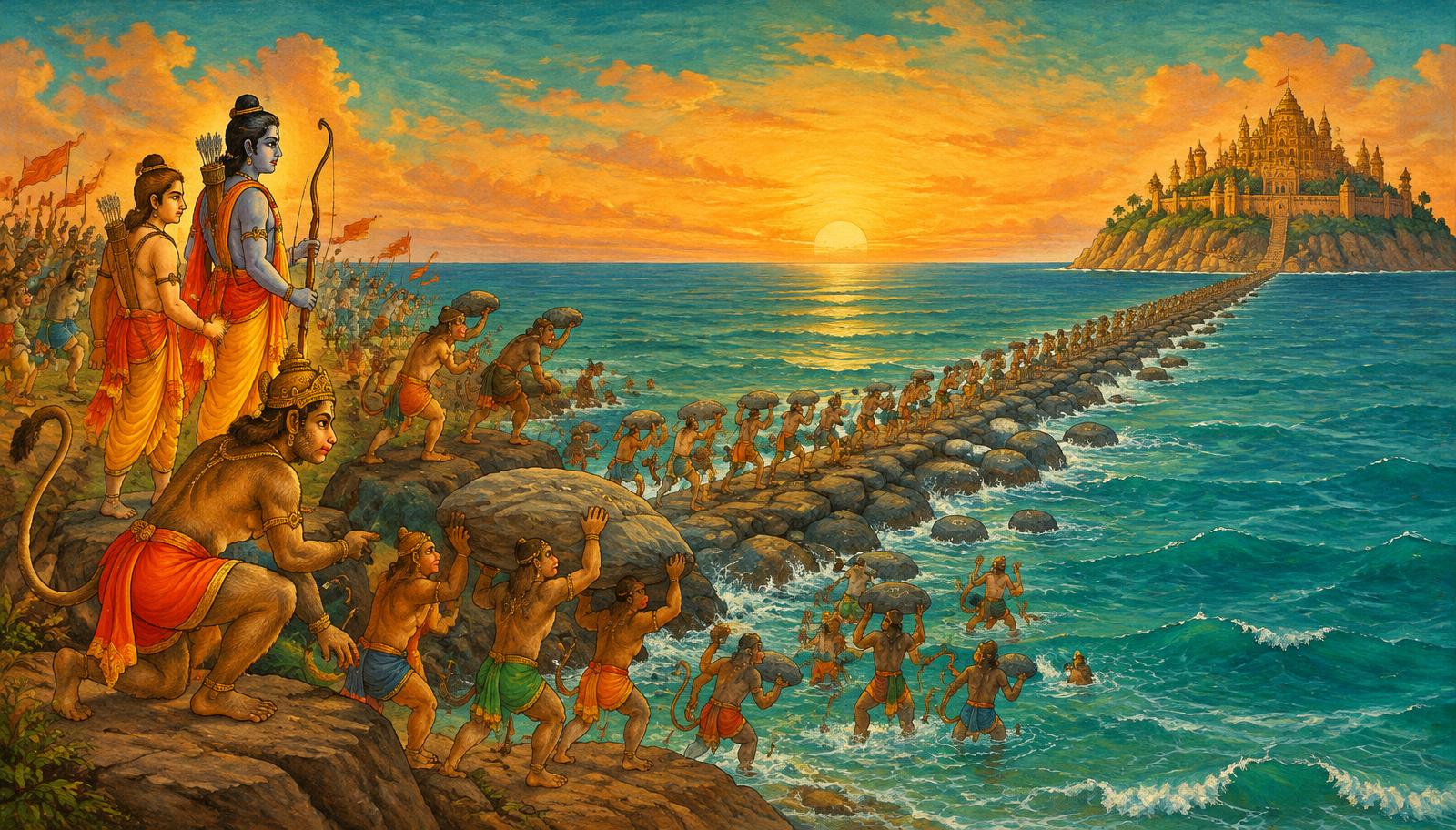
Ram needs an entire community to reach Lanka. Hanuman, Sugriv, Jambavan, Nal, Vibhishan and the Vanar Sena all contribute. Great things are rarely accomplished alone.
One stone → another stone → another stone → a bridge
No contribution is too small.
For older children & adults
Is Telling the Truth Always Easy?
Vibhishan warns his brother Ravan that his actions are wrong. Ravan refuses to listen. Vibhishan eventually chooses dharma over blind loyalty and seeks refuge with Ram.
Was he a “bad brother”? The story suggests something deeper: loving someone does not mean helping them do something wrong.
“A good friend, brother or family member can tell you the truth, even when you don't want to hear it.”
The Choice Between Dharma and Adharma
The deeper lesson isn't simply that Ram defeats Ravan. It is that our choices determine which qualities we strengthen within ourselves.
Dharma: choosing the right path and fulfilling one's responsibility, even when it is difficult. Adharma: turning away from it.
Act of homecoming
And Then, They Came Home
After fourteen years, Ram, Sita and Lakshman return to Ayodhya. The city welcomes them with lamps — the moment that connects the whole journey back to Diwali.
The darkness ends.
The diyas are lit.
Ram comes home.
Come experience the story together.